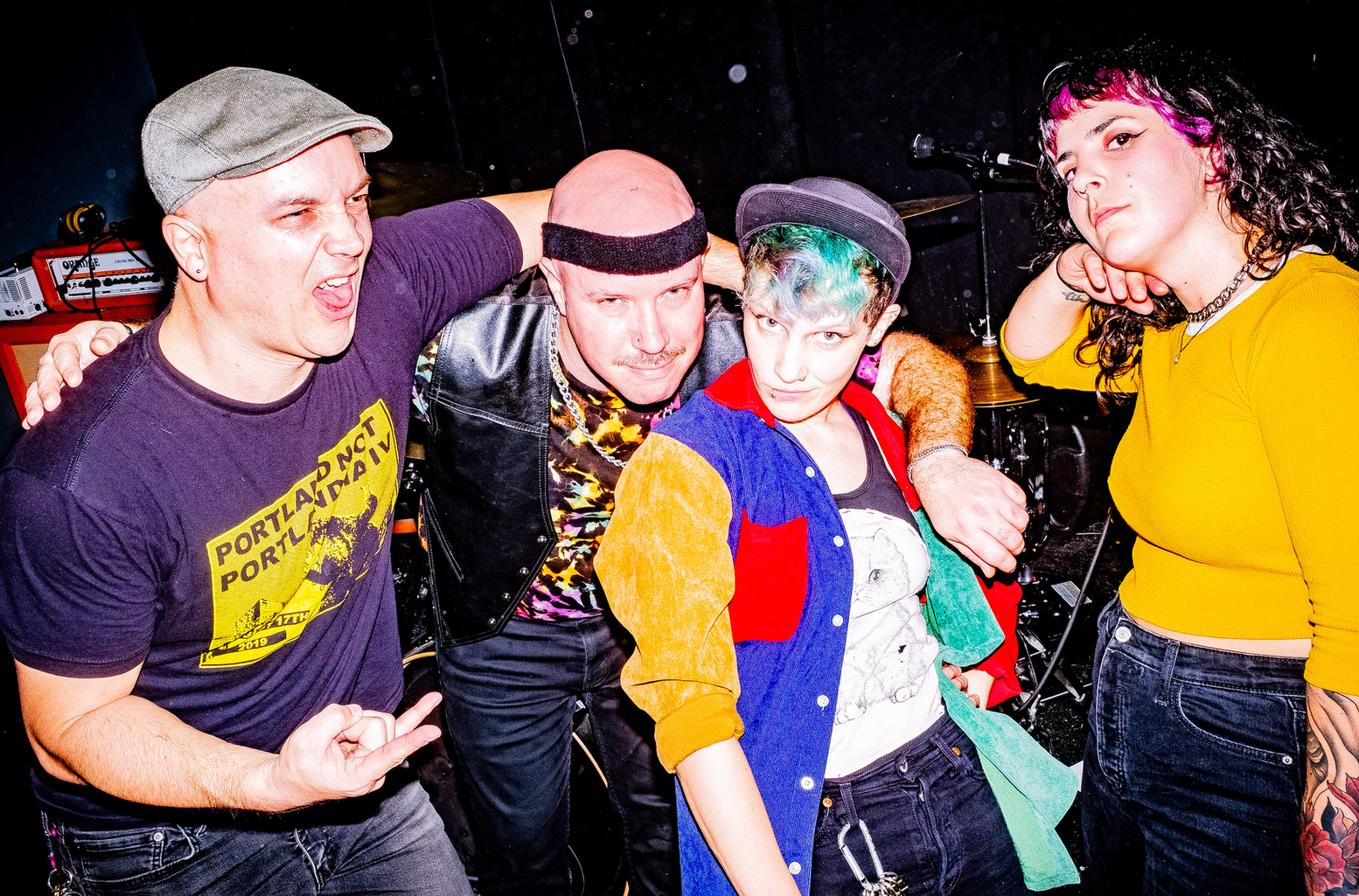
Tripping Jupiter Returns with “Crack That Drum”: Dance-Floor Defiance in Glitter and Heat
New York glam-pop project Tripping Jupiter is back, and this time the dance floor is the frontline.
“Crack That Drum”—released —is the band’s first new music since their award-winning debut album Lipstick of the Brave (2022), a record that blended art-pop, glam rock, and gender-liberation anthems, complete with a Bill Plympton–animated short film and festival accolades.
Where Lipstick often felt like a cinematic confession, “Crack That Drum” kicks the doors open. It’s a three-minute indie-pop detonation—somewhere between Scissor Sisters, MUNA, and early Bowie—with a hook that feels like both a club chant and a street march.
The track is produced by Audible Yays, the new production duo of platinum producer Barb Morrison (they/them) and Grammy-nominated Bart Schoudel (he/him), whose collective credits stretch from Blondie and LP to Beyoncé, Rihanna, and Coldplay.
Front person Madstone Rowan (he/they)—the voice and vision behind Tripping Jupiter—has always balanced groove, empowerment, and glitter. On “Crack That Drum,” they lean fully into that mix, framing dance not just as escape, but as defiance.
Dancing-as-Defiance in a Year That Feels Heavy
“Crack That Drum” arrives in a year where a lot of people don’t feel like getting dressed up and going out. Global chaos, burnout, political noise—2025 is messy. Madstone is fully aware of that weight, and the song is their attempt to push back without turning the track into a lecture.
On the moment the hook arrived
“The chorus came to me right away. I was driving in my car and I started singing this melody and the word ‘dance’ was in it—I sang it into my phone and later that day I laid down the music and started singing. The phrase ‘Crack That Drum’ just came out. It felt defiant, so the song was created around that.”
That sense of defiance is rooted in queer history, not just mood:
“I was thinking of how the queer community during the AIDS crisis would say, ‘We bury our dead in the morning, we protest in the afternoon and we dance all night long,’ and the importance of joy and exuberance in the midst of adversity and chaos.”
The chant “Crack That Drum!” ends up doing double duty—hook and battle cry at once. You can shout it drunk in a club or quietly carry it around as a reminder that your joy is still yours.
Inside the Track: Sparse Verses, Big Chorus, Airy Bridge
On first listen, “Crack That Drum” feels immediate—no intro monologue, no long build, just straight into the pulse. That was intentional.
On the arrangement and structure
“I had the structure of the song all worked out when we got into the studio. The intro is short and simple—just a solid drumbeat—and then the first verse comes in. Very simple, synth bass and drums and voice followed by a hint of the chorus and then the next part of the verse. Very sparse.
It builds from there but still sparse—the pre-chorus kinda just creeps in there creating a little tension and then the chorus comes in big. The bass and drums drop out on the next verse and here we are back at the pre-chorus and chorus again until the bridge hits. I wanted the bridge to be dreamy and airy… so it contrasted with the end choruses coming in even bigger. The lyrics are a bit playful, so the song structure needed to be as well.”
Interestingly, the tempo and key never changed from demo to master:
“Actually—the song structure and BPM remained the same from my demo to the full mix and production. I was lucky to kind of have that groove in mind when I wrote and it didn’t need to change.”
Chorus Power: Vocals on Vocals on Vocals
If “Crack That Drum” sticks in your brain after one spin, blame the chorus. It hits like a wall of voices, not just a drum trick.
On what lifts the chorus
“I can’t say what Bart Schoudel did to lift that chorus (he engineered and co-produced) bass and drum-wise, but it does just sound bigger. But what really lifts the chorus is the layered vocals. Bart is a magician—truly—those vocal layers just jump right out at you.”
Barb and Bart’s Audible Yays fingerprint is everywhere:
“Barb’s fingerprints are all over the song. They put in these little touches that just expand the sound and make it sound alive and immediate… The drop out after the first chorus is an obvious one—but the whole final production touches are Barb and Bart working seamlessly together… Bart’s bass and drum lines are among the best in the industry so that’s an obvious piece of his touch.”
For longtime Tripping Jupiter followers, this continues a relationship that started with “We Are Starlight (Audible Yays Remix),” which dropped on International Transgender Day of Visibility and turned a cinematic track into a club-ready celebration of queer visibility. “Crack That Drum” feels like the next chapter.
Channeling Lyrics, Not Over-Polishing Them
One of the wildest lines in the song—“I got a Tuesday smile, I took the blue from the sky”—feels like the kind of lyric that took 20 drafts. Madstone says it was almost the opposite.
On lyric writing and “Tuesday smile”
“A little secret—I don’t spend a very long time on my lyrics. I get myself in a kind of a weird hypnotic state and just channel the words—they just flow out based on the feeling I’m getting from the song.
I kept all the lyrics from my demo, except the final line of the chorus ‘Dance your life away’ didn’t come until we were recording in the studio. Barb suggested I needed a different phrase than just repeating ‘Crack That Drum’ four times in a row and I just came up with ‘Dance your life away’… ‘Dance your life away’ seemed more defiant. It just felt right.”
Ballroom DNA, Pose, and Pleasure-First Politics
Even when the lyrics don’t name names, “Crack That Drum” sits in a very specific lineage of queer dance resistance.
On the scenes that shaped the song
“Think the FX series Pose and the Black and brown ballroom scene of the late 1970s and throughout the 1980s in NYC… The AIDS crisis was raging. Violence against members of the queer community was at its height—and here they were, dancing the night away and looking incredible.”
On keeping the song pleasure-first, not preachy
“I don’t like being hit over the head with a political message when it comes to art… I wanted the defiance to come through the hard rhythm and the way I sang those lyrics and I think we achieved that.”
Live Reaction: Heads Bobbing Before the Chorus Hits
Before “Crack That Drum” ever hit streaming, Madstone quietly test-drove it live.
On playing it live pre-release
“I previewed this song in front of a live audience over the summer, before it was released. The response was immediate. People were drawn to it—bobbing heads, clapping—I knew this one was going to resonate with audiences. Especially in the chorus.”
When we asked what they hope new listeners feel in the first 30 seconds, they didn’t hesitate:
“I hope the song grabs them right away. We’re not wasting any time getting into the heat of the song… By the time the chorus comes in, I hope they’re hooked and want to keep hearing it.”
From Lipstick of the Brave to “Crack That Drum”: Lessons and Scars
Tripping Jupiter’s debut Lipstick of the Brave introduced Madstone as an art-pop storyteller—backed by players like Gail Ann Dorsey and guided by Barb Morrison’s production. The song and short film version leaned into gender freedom and androgynous glam, eventually screening at the Woodstock Film Festival.
That era was creatively rich—but the business side was rougher.
On what that first album cycle taught them
“I made a lot of mistakes. Worked with people who took my money and didn’t do that much for me—but ultimately, out came what I think is a beautiful record.”
And there’s more on the way:
On alternate versions and remixes
“Yes, there’ll be a club mix coming out for this and a few other new releases down the line in 2026. Not sure who we’ll get to do remix—anyone interested?”
Full Email Q&A with Madstone (Tripping Jupiter)
For the process nerds and deep-dive readers, here’s the full text of our email exchange about “Crack That Drum,” lightly edited for clarity.
On “Crack That Drum,” what moment turned the idea of dancing-as-defiance into the actual hook you sing?
The chorus came to me right away. I was driving in my car and I started singing this melody and the word “dance” was in it—I sang it into my phone and later that day I laid down the music and started singing. The phrase Crack That Drum just came out. It felt defiant so the song was created around that. I was thinking of how the queer community during the AIDS crisis would say “We bury our dead in the morning, we protest in the afternoon and we dance all night long” and the importance of joy and exuberance in the midst of adversity and chaos.
Can you walk us through the final arrangement map (intro → first drop → bridge) and one section you kept tweaking until the last minute?
I had the structure of the song all worked out when we got into the studio. The intro is short and simple—just a solid drumbeat—and then the first verse comes in. Very simple, synth bass and drums and voice followed by a hint of the chorus and then the next part of the verse. Very sparse. It builds from there but still sparse—the pre-chorus kinda just creeps in there creating a little tension and then the chorus comes in big. The bass and drums drop out on the next verse and here we are back at the pre-chorus and chorus again until the bridge hits. I wanted the bridge to be dreamy and airy, and that’s what we got on that bridge, so it contrasted with the end choruses coming in even bigger. The lyrics are a bit playful, so the song structure needed to be as well.
What’s doing the heavy lifting in the chorus groove—layered live drums, drum machines, or found/foley hits—and how did you shape the low end so it still moves on phone speakers?
I can’t say what Bart Schoudel did to lift that chorus (he engineered and co-produced) bass and drum-wise, but it does just sound bigger. But what really lifts the chorus is the layered vocals. Bart is a magician—truly—those vocal layers just jump right out at you.
Did the song’s BPM or key change during production to hit the vocal pocket or sit better between playlist neighbors?
Actually—the song structure and BPM remained the same from my demo to the full mix and production. I was lucky to kind of have that groove in mind when I wrote and it didn’t need to change.
The line “I got a Tuesday smile, I took the blue from the sky” is vivid—what drafts did it beat, and did any favorite lines get cut for flow?
A little secret—I don’t spend a very long time on my lyrics. I get myself in a kind of a weird hypnotic state and just channel the words—they just flow out based on the feeling I’m getting from the song. That’s what happened here. I kept all the lyrics from my demo, except the final line of the chorus “Dance your life away” didn’t come until we we’re recording in the studio. Barb suggested I needed a different phrase than just repeating “Crack the Drum” four times in a row and I just came up with “Dance your life away”. I’ve never heard anyone say that before. I’ve heard “Dance the night away” but “Dance your life away” seemed more defiant. It just felt right.
A specific Barb Morrison fingerprint and a specific Bart Schoudel fingerprint listeners can pick out on the final master?
Barb’s fingerprints are all over the song. They put in these little touches that just expand the sound and make it sound alive and immediate. It’s really amazing. The drop out after the first chorus is an obvious one—but the whole final production touches are Barb and Bart working seamlessly together. It’s amazing to watch them, they think like one mind. Bart’s bass and drum lines are among the best in the industry so that’s an obvious piece of his touch.
How are you imagining crowd participation live—clap patterns, call-and-response, or a drumline/floor-tom moment tied to lighting cues?
I previewed this song in front of a live audience over the summer, before it was released. The response was immediate. People were drawn to it—bobbing heads, clapping—I knew this one was going to resonate with audiences. Especially in the chorus.
Beyond Bowie, which queer club spaces or scenes (venues, DJs, balls, warehouses) most informed the attitude or groove of this track?
Think the FX series Pose and the Black and brown ballroom scene of the late 1970s and throughout the 1980s in NYC. Poor kids, homeless or formerly homeless queens and others, competing in ballroom. I mean, they invented “Vogue”— Madonna took that from the ballroom scene in NYC. The AIDS crisis was raging. Violence against members of the queer community was at its height—and here they were, dancing the night away and looking incredible.
You’ve said dance can be rebellion—what choices kept the song pleasure-first and avoided slogan fatigue in melody and rhythm?
I don’t like being hit over the head with a political message when it comes to art, and I’m guessing I’m not alone. I wanted the defiance to come through the hard rhythm and the way I sang those lyrics and I think we achieved that.
Are there alternate versions in the pipeline (harder club mix, strings-forward, unplugged) or planned remixes with guests outside your usual circle?
I can’t give it all away now but yes, they’ll be a club mix coming out for this and a few other new releases down the line in 2026. Not sure who we’ll get to do remix—anyone interested?
As your first release since Lipstick of the Brave, what lesson or scar from that era most directly shaped this new chapter?
Wow. Ok. I think back to those days and everything seemed so simpler then. I was writing and recording that record—13 songs—and I was immersed in the creativity part. I had no idea what awaited me when it came to promotion. I made a lot of mistakes. Worked with people who took my money and didn’t do that much for me—but ultimately, out came what I think is a beautiful record.
If someone presses play on “Crack That Drum” for the first time, what do you hope they feel in the first 30 seconds—and what do you want them to do when the hook hits?
I hope the song grabs them right away. We’re not wasting any time getting into the heat of the song. And I hope they get that this is a different song—as the lyrics are sung I think that will be obvious. That this is the opposite of generic and a lot of what is out there at the moment. By the time the chorus comes in, I hope they’re hooked and want to keep hearing it.